- Difficulty
- Beginner
- ● ● ○ ○ ○
- Time
- 30–40 min
- From blank page
- Steps
- 9
- Circle → ocean blue
- Best for
- Ages 6+
- Kids & adults
Grab these first
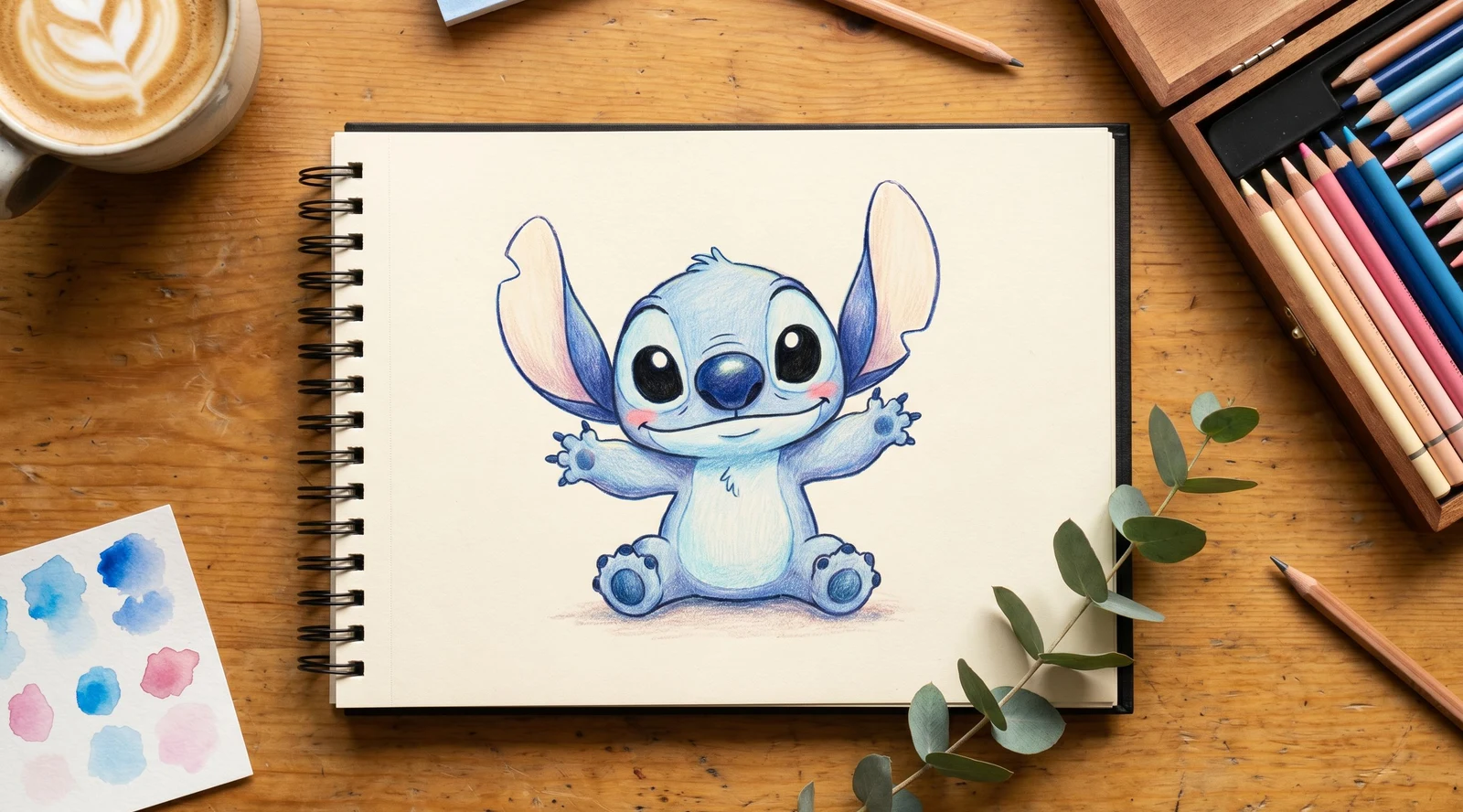
A pencil (HB or 2B), an eraser, plain paper, and colored pencils — sky blue, a deeper indigo, cream, soft pink, and black. A black fineliner is optional for the clean outline in step 5, but graphite alone is plenty.
Want a perfectly proportioned Stitch on the first try? Open the Stitch template in ARTrace and project it onto your paper through the AR camera. Your hand does the drawing; your phone holds the shape in place — a modern camera lucida in your pocket. More to trace once you finish? Browse the full drawings-to-trace library for ideas.
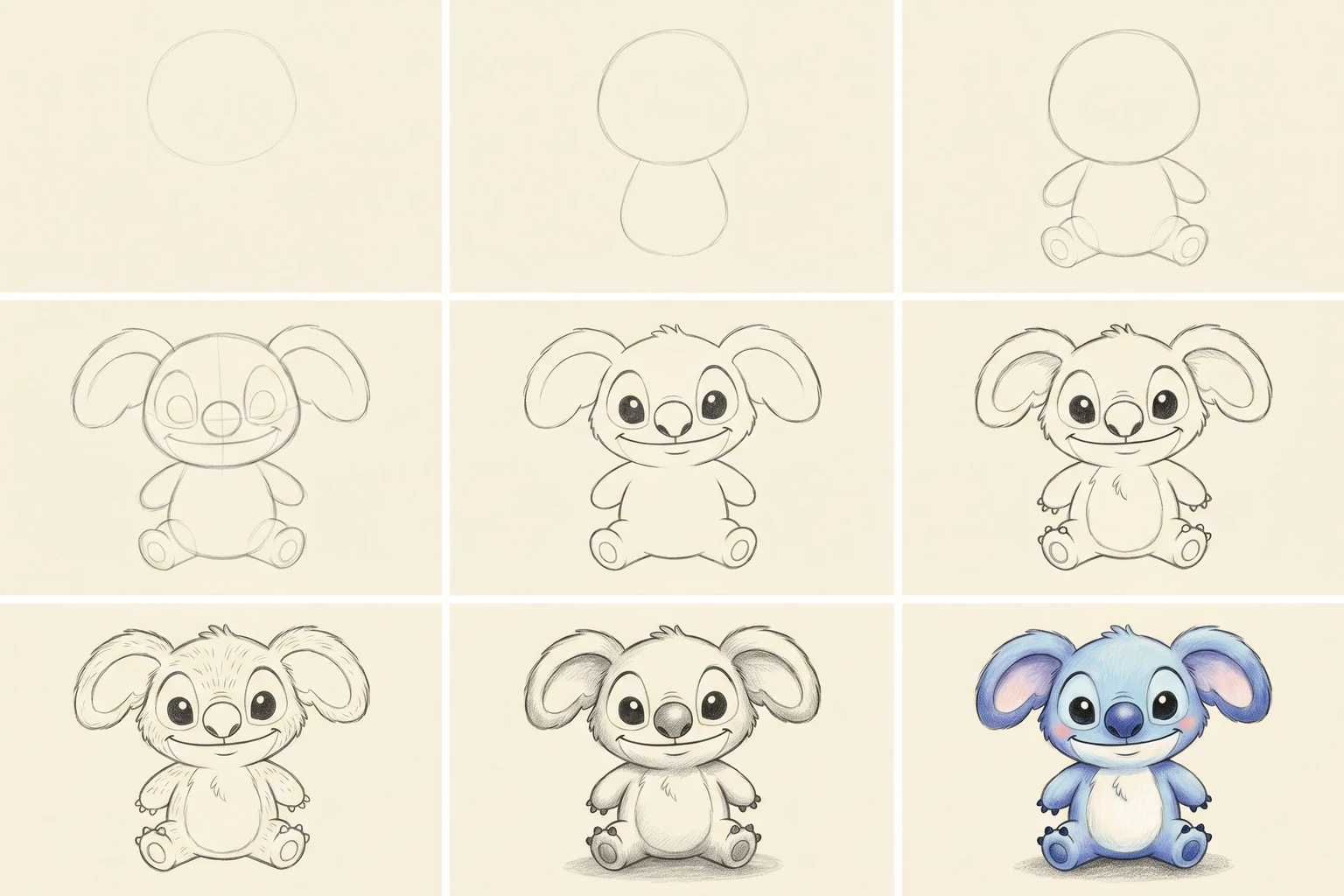
1. Round head circle
Start with a single soft circle in the upper half of your page. That's the head. Make it a touch wider than a strict compass circle — Stitch's head is famously round and oversized compared to his body, so leave plenty of room up here and don't be shy with the width.
Keep the pencil genuinely faint — this is construction work and you'll erase most of it later. A slightly squashed, hand-drawn circle reads more naturally than a perfect one, so don't fight your hand on this first stroke.
2. Pear-shaped body
Right under the head, tucked slightly behind the chin, draw a smaller pear-shaped body — wider at the bottom, narrower at the shoulders. Stitch is mostly head and ears, so the body should look shorter than the head, not taller. If you find yourself sketching a tall torso, scale it back down.
3. Stubby arms and legs
Two short stubby arms come out at the sides of the body — wider than a typical cartoon, since Stitch has a famously squat, heavyset frame. Two stubby legs splay forward with small oval paws. Everything is short and round; no elongated limbs, no elegant proportions. Think "loaf of bread with limbs."
4. Big floppy ears and snout — instant Stitch
Two big rabbit-like ears curve out and down from the top of the head. Tilt one ear slightly — perfectly symmetric ears look stiff; one ear flopping a little more than the other gives him that mischievous look. Then sketch the wide rounded snout area across the lower half of the face — a soft curve, not a hard line.
5. Bring the face to life — and commit to a clean line
Two large oval eyes set wide apart — Stitch's eyes are huge and slightly tilted inward at the tops, which is what gives him that playful look. A small triangular nose sits low between the eyes, and a wide curving grin stretches almost ear to ear. Then trace the whole silhouette with one confident line and erase every construction stroke underneath.
6. Belly patch and inner ears
A soft curved line down the chest marks the lighter belly patch where the cream-colored fur lives. Inside each ear, draw an inner-ear oval that will hold the pink later. Add a few tiny claw marks on the front paws — three or four short curves each. These small additions are what turn a smooth cartoon blob into a recognizable Stitch.
7. Hint at the fur
Short, directional pencil strokes around the edges of the head, cheeks, and ears — denser where the fur is fluffier (top of the head, cheeks, around the ears), lighter on the belly. A few stray tufts sticking up at the very top of the head give him that just-woke-up texture. You're suggesting fur, not drawing every hair — less is more.
8. Shadows do the heavy lifting
Soft graphite shading under the chin, along the belly, between the limbs and the body, and inside the ears. Then the single most important touch: a clear oval shadow on the ground beneath the paws. It's the difference between a floating sticker and a real character sitting on the page.
9. Ocean-blue color — the final flourish
Light sky-blue across most of the body, then deeper indigo on the back of the head, the back of the ears, and along the spine — that two-tone blue is what gives Stitch his ocean-like depth. Cream-white on the belly patch and inner-ear pads, soft pink cheek blush and a subtle pink tint inside the ears. Glossy black for the eyes and the tiny claws. Deepen the existing shadows a touch and sign your name.